
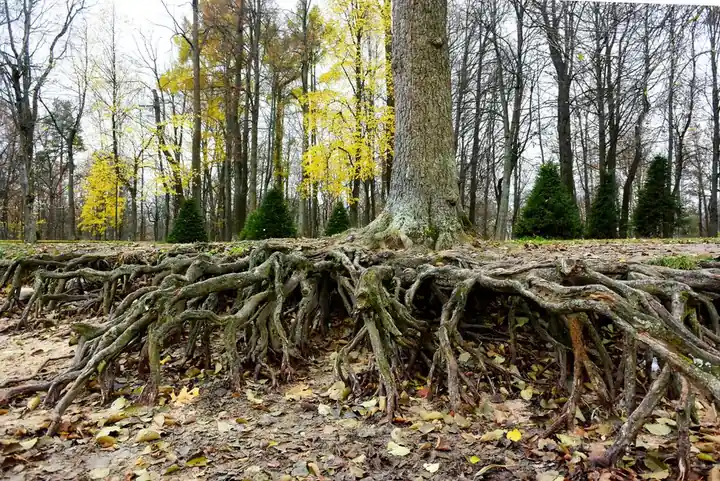
Your sewer line keeps clogging because tree roots have already found the pipe, and cutting them once does not kill them. Roots enter through a joint, crack, or loose fitting, feed on the warm water and waste inside, and regrow into the same opening within months - which is why snaking clears the line for a while and then the backup returns. This article explains how root intrusion actually works in Colorado Springs, why the clog keeps coming back, and what genuinely clears it for good.
A sewer line clogged by tree roots in Colorado Springs CO is not a one-time plumbing event. It is an ongoing contest between a living root system and a pipe that has already been breached. Once you understand that, the repeat backups make sense.
The Short Answer: Roots Never Stop Growing
Tree roots in a sewer line keep coming back because the root tip that was cut simply branches and regrows into the same moisture source. A root hair thinner than a pencil can enter a hairline crack, and within one growing season it becomes a mat of fibrous roots that catch toilet paper, grease, and wipes. Snaking slices through that mat, but it does not remove the roots outside the pipe or seal the entry point. So the clog returns - usually within 6 to 18 months.
That is the whole reason this problem feels personal. You paid to clear the line, and three months later the basement floor drain is backing up again.
How Tree Roots Actually Get Into a Sewer Line
Roots do not break into a healthy pipe. They exploit what is already failing. In Colorado Springs, most of the sewer laterals we scope are clay tile, cast iron, or orangeburg - materials installed between the 1940s and 1970s that have had decades of soil movement, freeze-thaw cycles, and root pressure working on them.
Here is the sequence:
- Vapor escape. A sewer line carries warm water and organic waste. That warmth and moisture escape through the weakest point - a joint, a hairline crack, or a deteriorated gasket.
- Root attraction. Tree and shrub roots grow toward that moisture. They do not need a big opening. A gap of 1/16 inch is enough.
- Entry and expansion. Once inside, the root feeds on the nutrient-rich flow. It grows, thickens, and creates a hair-catching net.
- The clog. Toilet paper, grease, and flushable wipes snag on the root mass. Water backs up. You call someone. They snake it. The root stays.
That last point is the one most homeowners miss. The snake clears the inside of the pipe. The root structure outside the pipe is untouched.
Why the Clog Keeps Coming Back
The clog returns because root removal and root regrowth are two different problems. Mechanical cutting removes what is inside the pipe today. It does nothing about the root system that will push new growth through the same opening next spring.
We see this constantly. A homeowner calls in March, we clear the line, and by August the same toilet is gurgling. The reason is simple: the root tip was cut, and a cut root tip branches. One root becomes three. Three become a dozen. The opening gets worse, not better.
This is why a one-time snaking is a temporary fix, not a repair. If you want the backups to stop, you have to address both the blockage and the entry point. That usually means sewer line cleaning Colorado Springs CO with a method that scours the pipe wall, followed by a camera inspection to see what is actually left.
Why Colorado Springs Soil Makes This Worse
Colorado Springs sits on expansive clay and decomposed granite, and that soil moves with every freeze-thaw cycle. From November through March, the ground heaves and settles. A pipe that was tight in July can have a visible gap by February.
Add the tree canopy. Colorado Springs has mature cottonwoods, elms, ashes, and blue spruces in older neighborhoods, plus thousands of younger trees planted in the 1990s and 2000s that now have root systems wide enough to reach a sewer lateral. A cottonwood's roots can travel 30 to 50 feet from the trunk. If your lateral runs anywhere near that radius, you are in the zone.
Older neighborhoods feel this hardest. In Old Colorado City drain cleaning, we regularly scope clay tile laterals from the early 1900s that have been root-penetrated for decades. The same is true in Cheyenne Mountain drain cleaning, where large lots and mature trees mean long laterals with plenty of root exposure.
Newer construction is not immune. Builder-grade PVC laterals from the 1990s and 2000s can shift at the joints when soil settles, and that is all a root needs.
How We Find and Clear Root Intrusion
You cannot fix what you cannot see, so we start with a camera. A sewer camera inspection Colorado Springs CO shows us exactly where the roots are, how far they have grown, and whether the pipe is cracked, offset, or collapsed. That matters because a root clog over a collapsed pipe is a different repair than a root clog at a single joint.
Once we know what we are dealing with, we clear it. For root intrusion, the right tool is almost always hydro jetting. A hydro jetting Colorado Springs CO service uses 3,000 to 4,000 PSI of water at 10 to 20 gallons per minute to scour the pipe wall and cut roots back to the pipe surface. It does not just poke a hole through the clog the way a snake does. It cleans the full diameter of the pipe.
After jetting, we scope again. If the roots are gone and the pipe is structurally sound, you are done. If the pipe is cracked or offset, we tell you what the repair looks like - and we do not leave you guessing about cost.
What about root killer chemicals?
Foaming root killers can slow regrowth, but they do not remove an existing root mass. They are a maintenance tool, not a fix. If your line is already backing up, a chemical is not going to clear it.
Common Mistakes That Make Root Clogs Worse
Most repeat root clogs we see involve one of these five mistakes:
- Snaking and stopping there. The snake clears the blockage but leaves the root structure. The clog returns.
- Using store-bought drain cleaner. Caustic chemicals do not touch roots. They can also damage older pipes and create a hazard for whoever works on the line next.
- Flushing wipes and paper towels. These snag on root masses and turn a slow drain into a full backup. Even "flushable" wipes do not break down.
- Ignoring slow drains. A gurgling toilet or a tub that drains slowly is an early warning. Waiting until sewage backs into the basement costs more.
- Planting trees over the lateral. We see this in newer neighborhoods where homeowners add shade trees without checking where the sewer runs.
If you are already dealing with a backup, clogged drain removal Colorado Springs CO is the right first call. We clear the line, then tell you honestly whether you are looking at a maintenance issue or a repair.
When to Call a Professional
Call us when the same drain backs up twice in a year, when you hear gurgling from a toilet or floor drain, or when water backs up in one fixture while you use another. Those are signs of a main line problem, not a fixture problem.
We handle this every week across Colorado Springs. Our team scopes the line, clears the root intrusion, and tells you what it will take to keep it from coming back. If you are in Briargate drain cleaning or anywhere else in the city, we can usually get to you the same day.
We also handle the smaller stuff that often shows up alongside a root clog - a floor drain cleaning Colorado Springs CO service for the basement drain that backs up first, or toilet drain unclogging Colorado Springs CO when the lowest toilet in the house is the one that gurgles.
Frequently Asked Questions
Why does my sewer line keep getting clogged by tree roots in Colorado Springs?
Because the root system outside the pipe is still alive. Snaking or jetting removes roots inside the pipe, but the roots regrow into the same opening within 6 to 18 months. Without addressing the entry point, the clog returns.
How do I remove tree roots from my sewer line in Colorado Springs CO?
Hydro jetting at 3,000 to 4,000 PSI is the most effective method. It scours the pipe wall and cuts roots back to the surface. A camera inspection before and after confirms the roots are gone and the pipe is intact.
Can hydro jetting remove tree roots in Colorado Springs?
Yes. Hydro jetting removes root masses that snaking leaves behind. It cleans the full diameter of the pipe, not just a channel through the clog. Most root clogs clear in a single visit.
How much does sewer line cleaning cost in Colorado Springs?
Typical 2026 pricing in Colorado Springs runs $250 to $500 for hydro jetting a residential main line, and $150 to $300 for snaking. Camera inspections usually add $150 to $350. We quote upfront before we start.
Will roots come back after hydro jetting?
They can, because jetting removes the roots but does not seal the entry point. If the pipe is cracked or offset, roots will return. A camera inspection tells you whether you need a repair or just annual maintenance.
Get Help With Drain Cleaning in Colorado Springs
If your sewer line keeps backing up, we can scope it, clear the roots, and tell you what it takes to stop the cycle. Call Drain Plumber Pros at +1 719-455-0231 and we will get your line flowing again.